
Now Offering Hair Loss Treatments!

Breast Revision Surgery in Palm Beach Gardens and Jupiter

Breast revision surgery is one of the most technically demanding procedures in plastic surgery, and it is an area where experience drives results. By the time a patient considers revision, scar tissue has formed, the pocket has been stretched, and the soft tissue envelope has changed. Capsular contracture remains the most common reason patients seek correction, and published outcomes confirm that results depend on how the capsule, the implant plane, and the soft tissue support are managed together. Dr. David Lickstein brings more than 25 years of complex breast surgery experience to these cases, with a reconstructive foundation that includes single-stage implant reconstruction in Palm Beach County since 2007. Lickstein Plastic Surgery serves revision patients across Palm Beach Gardens, Jupiter, Port St. Lucie, North Palm Beach, West Palm Beach, Tequesta, and Wellington.

Not Just Another Implant Swap

Your breast tissue, fat, skin, and pectoral muscle behave like one connected unit, and they keep changing after augmentation, with each pregnancy, each weight shift, and with normal aging. Around any implant, your body also forms a thin layer of scar tissue called the capsule, a normal healing response. When that biology stays quiet, an augmentation can look natural for many years. When something in that system shifts, the capsule, the pocket, the skin, or the implant itself, the result can lose the precision it originally had.

For years, the standard response to a problem implant was straightforward: remove it, place a new one, and close. In selected patients, that simple exchange can work, and the American Society of Plastic Surgeons confirms that implant removal and exchange remains an established revision strategy when the original anatomy cooperates. Implants are not lifetime devices, and society guidelines agree that complications, when they occur, can usually be corrected. The basic science behind that traditional approach is sound.

A simple implant swap is no longer the most advanced version of revision surgery, and at Lickstein Plastic Surgery we do not treat a revision as a fresh primary augmentation when the real problem is the capsule, the pocket, or the soft tissue support.

Breast revision in our hands is a planned correction of the capsule, the implant pocket, and the soft tissue envelope, addressed together so the new result holds. Where the capsule is thickened, it is treated as the primary problem. Where the pocket has stretched, it is rebuilt with mesh or matrix support when indicated. The goal is the same one Dr. Lickstein applies to every breast procedure: a natural, undetectable appearance that fits the specific patient. Not a marketing distinction. A surgical one. Grounded in biology.

Why Breast Revision Is Its Own Surgical Discipline

A revision is a different operation from your first augmentation, even when the names sound similar. By the time a patient considers revision, the chest wall has already been operated on at least once, scar tissue has formed, and the soft tissue envelope has been stretched by an implant for months or years. The American Society of Plastic Surgeons describesbreast implant revision as a procedure intended to correct problems or improve outcomes from a prior augmentation or reconstruction, andASPS procedural statisticscontinue to rank implant removal and exchange among the highest-volume revision procedures in the United States.

That means a revision surgeon is not just placing an implant. They are reading the existing pocket, deciding whether the capsule needs to be removed, choosing whether to switch the implant plane, judging whether the lower pole needs reinforcement, and deciding whether abreast liftshould be added. Those judgments are where technique and experience drive the result.

The Most Common Reasons Patients Seek Revision

Capsular Contracture

A thin scar tissue capsule forms around every breast implant. In a subset of patients, that capsule thickens and tightens, distorting the breast and sometimes causing pain. A clinical review in Archives of Plastic Surgery identifies capsular contracture as the most common late complication of breast augmentation. Symptoms range from mild firmness to a visibly distorted, painful breast. On the Baker scale, only grades III and IV typically require surgical correction.

Implant Rupture or Leak

Saline ruptures usually announce themselves, the implant deflates within days. Silicone ruptures are often silent, which is why theU.S. Food and Drug Administration recommends periodic MRI or ultrasound screening for silicone implant patients. A confirmed rupture warrants surgical removal of the device.

Implant Malposition

Bottoming out occurs when the implant settles below the natural breast crease. Symmastia occurs when implants drift toward the chest midline. Lateral malposition pushes the implant toward the armpit. Each requires the pocket itself to be rebuilt, not just the implant to be moved.

Rippling and Visible Implant Edges

Rippling is more common with saline implants and with implants placed above the pectoral muscle. Correction usually involves repositioning to a submuscular plane and, in selected cases, adding soft tissue support.

Size, Shape, or Style Change

Some patients are not dealing with a complication. They want a different size, a different implant style, or to remove implants entirely. Others are responding to changes in the breast itself. Pregnancy, weight fluctuation, and normal aging can cause the breast tissue to grow, shrink, or descend over the implant, shifting a result that once looked natural.

How We Approach Capsular Contracture Correction

Capsular contracture is a tissue response, not a placement error.. The capsule, once thickened, will not relax on its own. Modern surgical correction usually involves partial or removal of the entire capsule, followed by a decision about whether to place a new implant and how to reinforce the pocket.

Two factors meaningfully change recurrence risk:

First, implant plane. Where the implant sits relative to the muscle and fascia influences contracture risk, though the relationship is not uniform across patients or implant types. Submuscular placement has the longest outcomes data supporting lower contracture rates, as reflected in a systematic review of submuscular implant placement and a separate study in Plastic and Reconstructive Surgery. Subfascial placement has gained meaningful ground in recent years, with emerging literature reporting comparably low contracture rates in selected patients. Dr. Lickstein evaluates plane selection individually based on each patient’s anatomy, implant history, and prior result.

Second, tissue support with acellular dermal matrix or mesh.A 2025 series in Plastic and Reconstructive Surgery reported a 90 percent success rate in surgical treatment of Baker III and IV capsular contracture when acellular dermal matrix was added to capsulectomy. The long-term multicenter BROWSE study found lower revision rates for contracture and higher patient-reported satisfaction in matrix-supported reconstructions over a median nine-year follow-up. Additional analysis ofbiologic and synthetic mesh in revision reconstructionconfirms that scaffold materials help prevent recurrent contracture.

These decisions, plane, capsulectomy strategy, and reinforcement, are made case by case. Dr. Lickstein has spent more than two decades performing both primary and revision breast surgery, including complex reconstructive cases, and that depth drives the surgical plan.
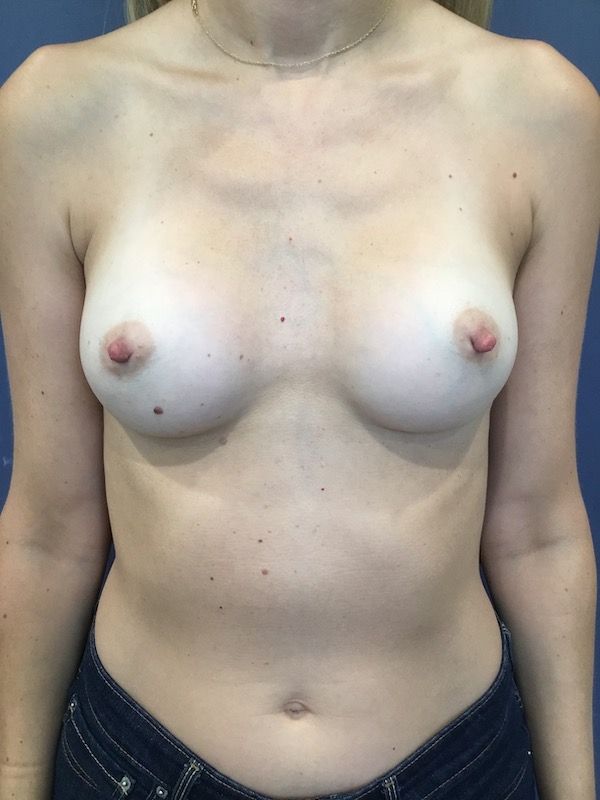
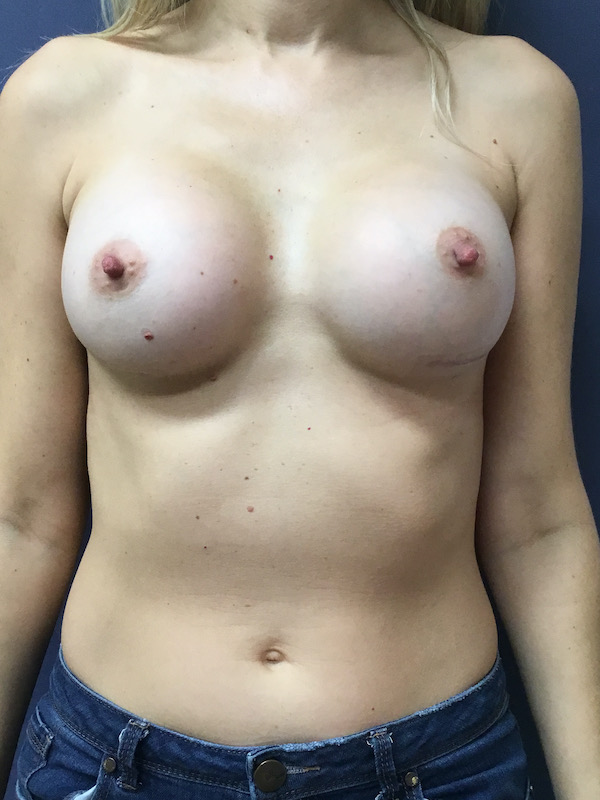
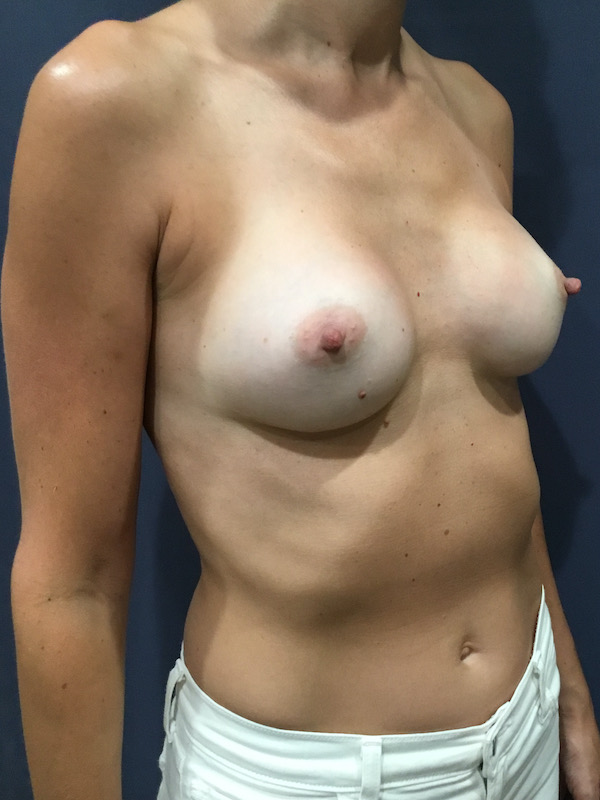
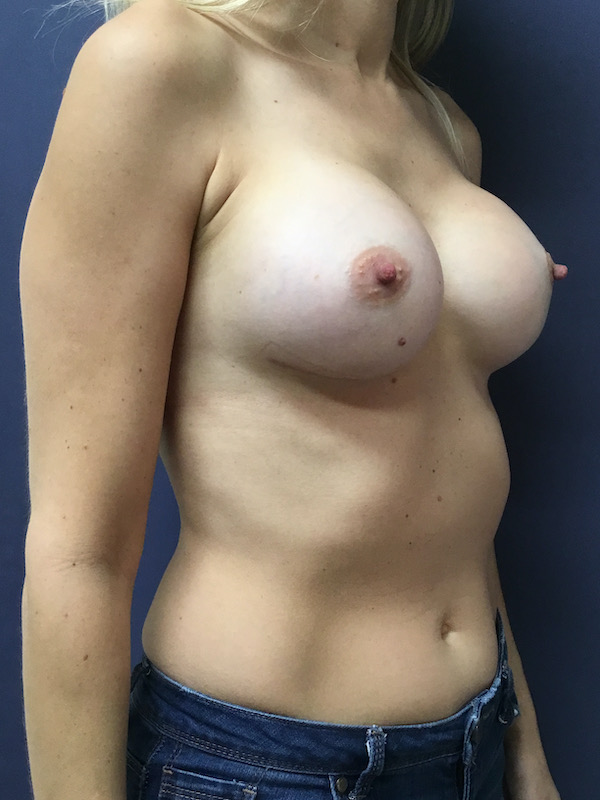
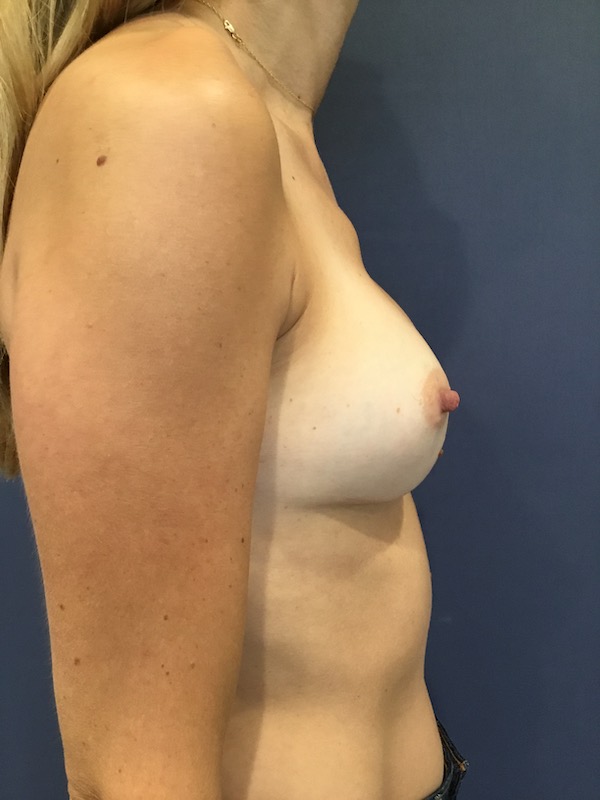
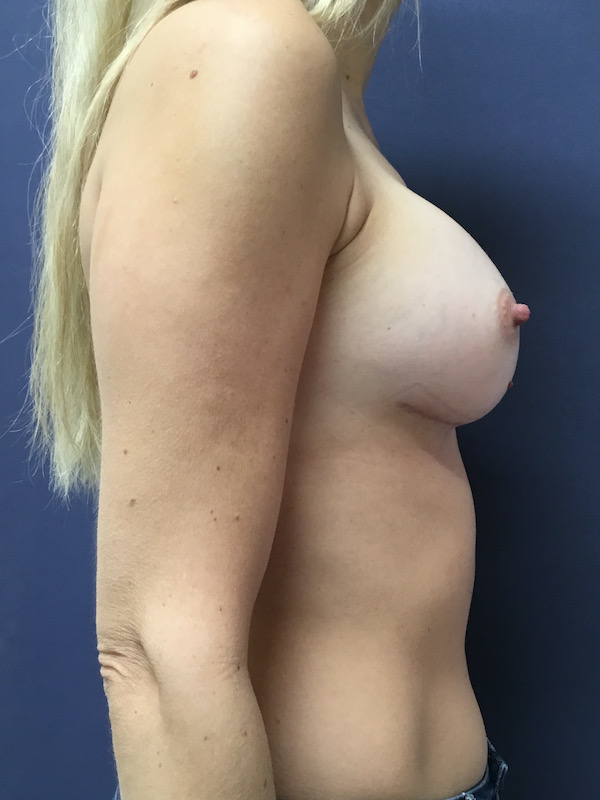
Breast Revision Surgery

Before & After

A standard of excellence recognized year after year by patients, the community, physician peers, and professional societies. The natural results speak for themselves.

Surgical Techniques Used in Complex Revision

Depending on the reason for revision, the plan may include one or more of the following:

  • Complete capsulectomy, removal of the entire scar tissue capsule, used for Baker III and IV contracture.
  • En bloc capsulectomy, removal of implant and capsule together, often used in implant rupture or for patients seekingbreast implant removal for breast implant illness concerns.
  • Pocket plane change, moving the implant from subglandular to subfascial or submuscular to address rippling, palpability, or recurrent contracture.
  • Pocket reconstruction with acellular dermal matrix or mesh to reinforce the lower pole, the inframammary fold, or the lateral pocket edge.
  • Concurrent mastopexy, combining a breast lift with implant exchange when the skin envelope has stretched.
  • Implant exchange with a different size, projection, or material.
column image

Who Is a Good Candidate,
and Who Should Wait


A good revision candidate is in stable general health, does not smoke, is at a stable weight, and has waited at least six to twelve months since the original surgery. Revision may not be the right step yet for patients still in early healing, planning a future pregnancy or significant weight change, actively smoking, or whose imaging raises concerns that should be addressed first. Dr. Lickstein and Dr. Forleiter discuss these factors openly so patients make a decision they will be confident in months later.


What to Expect, From Consultation Through Recovery

Your first appointment is a working consultation. Bring your operative reports if you have them, any prior imaging, and a clear sense of what you do not like about your current result. Dr. Lickstein or Dr. Forleiter performs a physical examination, reviews your history, and outlines a plan that may include capsulectomy, a pocket plane change, mesh or matrix support, a lift, or implant exchange. Cost, recovery, and realistic outcomes are discussed in detail.

Most breast revisions are performed as outpatient procedures under general anesthesia in our accredited surgical facility and may take two to four hours. Recovery is typically less involved than the original augmentation. Most patients return to desk work within five to seven days, light activity within two weeks, and full exercise around six weeks. Final shape continues to refine over three to six months as the implant settles.

Why Patients Across Palm Beach County Choose Dr. Lickstein for Revision

Lickstein Plastic Surgery is one of the most experienced breast surgery practices in Palm Beach County, with a surgical team that brings reconstructive depth, hospital leadership, and board-certified training to every revision case.

David Lickstein, MD, FACS

Dr. Lickstein is the founder of Lickstein Plastic Surgery and a board-certified plastic surgeon with more than 25 years of breast surgery experience. He trained at Northwestern University, Albany Medical College, and Harvard Medical School at Massachusetts General Hospital, and is a Fellow of the American College of Surgeons. He is one of the few surgeons in Florida with extensive experience in single-stage implant reconstruction after mastectomy, a technique he has performed since 2007. That reconstructive foundation, working with complex pockets and scarred tissue planes, directly informs his approach to complex revision. He has served as Chief of the Department of Surgery at Jupiter Medical Center and Chief of the Section of Plastic Surgery at Good Samaritan Medical Center, and maintains active staff privileges at Palm Beach Gardens Medical Center. Dr. Lickstein has been named to Newsweek’s America’s Best Plastic Surgeons in 2021, 2023, and 2025, recognized by Castle Connolly Top Doctors, elected to the RealSelf 100 & 500 Hall of Fame, and named to the Palm Beach 100 most influential business leaders.

Patient Reviews and Testimonials


“I had an amazing experience with Dr. Lickstein for my breast augmentation revision. After a previous surgeon in Boca completely botched my initial surgery in 2023, I was nervous about correcting it. Dr. Lickstein did a phenomenal job on the revision and gave me exactly what I asked for. I am coming up on one year post op and am so incredibly grateful for his expertise and care.”

– R.V., Google Review ⭐⭐⭐⭐⭐

“I cannot thank Dr. Lickstein enough for my breast revision. After experiencing several failed results from previous surgeons, l am sooo thankful to finally get the results I was seeking. I wholeheartedly recommend Dr. Lickstein to anyone who has had less than ideal results in the past. Dr. Lickstein is truly amazing at what he does and all staff members have been great! Thank you thank you!!!”

– A.A., Google Review⭐⭐⭐⭐⭐

“I could say thank you enough for Doctor Lickstein and his staff. Very professional and caring . I came into their office for a breast revision as well as some other botched areas from a previous doctor and I must say the results are absolutely amazing! I highly recommend this place. I get asked every day about my body and I always have the biggest smile and refer them to doctor Lickstein. He’s one of the best out there! I highly recommend!”

– A., Google Review⭐⭐⭐⭐⭐

Frequently Asked Questions

icon q

Am I a Good Candidate for Breast Revision Surgery in Palm Beach Gardens?

You are likely a good candidate if you are in stable general health, do not smoke, are at a stable weight, have realistic expectations, and are at least six to twelve months past your prior breast surgery. Dr. Lickstein confirms candidacy at the consultation through a physical examination and a review of your operative history. Lickstein Plastic Surgery offers revision consultations at our Palm Beach Gardens location, serving patients from Jupiter, Port St. Lucie, and throughout Palm Beach County.

icon q

Can Capsular Contracture Come Back After Revision?

Yes, recurrence is possible, but the right surgical strategy meaningfully reduces the risk. Published outcomes show that complete capsulectomy combined with submuscular implant placement and tissue reinforcement, when indicated, lowers recurrence compared with capsule release alone. At Lickstein Plastic Surgery, our surgeons determine the right capsulectomy and reinforcement strategy for each patient based on their specific anatomy and prior surgical history.

icon q

Should I Return to My Original Surgeon for Revision?

Not necessarily. A revision is a different operation than a primary augmentation, and a fresh evaluation by a surgeon with extensive revision experience is often the better choice. The board-certified plastic surgeons at Lickstein Plastic Surgery in Palm Beach Gardens regularly treat revision patients from Jupiter, Tequesta, North Palm Beach, and surrounding communities whose original procedures were performed elsewhere.

icon q

Can I Change My Implant Size, Type, or Position During Revision?

Yes. A revision is often the right moment to switch implant material, adjust size, change projection, or move the implant to a different plane. The existing pocket and your soft tissue envelope set the limits on what is achievable, and Dr. Lickstein reviews those tradeoffs at the consultation.

icon q

Can Breast Revision Be Combined With a Breast Lift?

Yes, breast revision can often be combined with other cosmetic surgery procedures to achieve a comprehensive makeover and rejuvenation. Depending on individual needs and goals, procedures such as liposuction, facelift, tummy tuck, Botox, and injectables can be performed concurrently. However, the feasibility of combining procedures depends on various factors including the patient's overall health, the extent of surgery required, and the recommendations of our providers.

icon q

Where can I find breast revision surgery near me?

Yes. If the skin envelope has stretched or the nipple has dropped relative to the breast crease, adding a breast lift (mastopexy) at the time of revision usually produces a better, longer-lasting result than implant exchange alone.

icon q

How Long Is Recovery From Breast Revision Surgery?

Most patients return to desk work within five to seven days and resume full activity around six weeks. Final shape continues to refine over three to six months.

icon q

What is capsular contracture correction in Palm Beach Gardens?

Capsular contracture correction is a surgical procedure that removes the thickened scar tissue capsule that has formed around a breast implant and, depending on the case, repositions the implant to a different plane and reinforces the pocket with acellular dermal matrix or mesh. At Lickstein Plastic Surgery in Palm Beach Gardens, our surgical team treats Baker III and IV contracture with complete capsulectomy and individualized pocket reinforcement strategies based on published outcomes data.

icon q

How do I find a breast revision surgeon in Jupiter or Palm Beach Gardens?

Lickstein Plastic Surgery is located in Palm Beach Gardens and serves patients from Jupiter, Tequesta, North Palm Beach, West Palm Beach, Port St. Lucie, and Wellington. The practice is led by board-certified plastic surgeons with extensive breast surgery experience, including complex revision and reconstructive cases. Consultations can be scheduled online or by phone.

Contact Us to Request a Consultation

If you are considering breast revision and you live in Palm Beach Gardens, Jupiter, Port St. Lucie, Tequesta, North Palm Beach, West Palm Beach, or Wellington, contact Lickstein Plastic Surgery to request a consultation. Dr. Lickstein and Dr. Forleiter will review your goals, examine your current result, and explain the surgical options that fit your anatomy.

Contact Us
Trused Source Icon - Checkbox Sources

1 American Society of Plastic Surgeons. What Is Breast Implant Revision Surgery? https://www.plasticsurgery.org/cosmetic-procedures/breast-implant-revision

2 American Society of Plastic Surgeons. Plastic Surgery Statistics Report. https://www.plasticsurgery.org/news/plastic-surgery-statistics

3 Headon H, Kasem A, Mokbel K. Capsular Contracture After Breast Augmentation: An Update for Clinical Practice. Archives of Plastic Surgery, 2015. https://www.ncbi.nlm.nih.gov/pmc/articles/PMC4579163/

4 U.S. Food and Drug Administration. Risks and Complications of Breast Implants. https://www.fda.gov/medical-devices/breast-implants/risks-and-complications-breast-implants

5 Zhu L, Zhu J, Qian Y, Jiang H. Reduced Capsular Contracture With Smooth and Textured Breast Implants Following Submuscular Mammoplasty: Systematic Literature Review. Future Oncology, 2021. https://doi.org/10.2217/fon-2021-0510

6 Filiciani S, Siemienczuk GF, Etcheverry MG. Smooth Versus Textured Implants and Their Association With Capsular Contracture in Primary Breast Augmentation. Plastic and Reconstructive Surgery, 2022. https://doi.org/10.1097/PRS.0000000000008717

7 Hidalgo DA, Weinstein AL. Surgical Treatment of Capsular Contracture With Acellular Dermal Matrix: 100 Consecutive Cases. Plastic and Reconstructive Surgery, 2025. https://doi.org/10.1097/PRS.0000000000012508

8 Wilson RL, Kirwan CC, et al. BROWSE: A Multicentre Comparison of Nine Year Outcomes in Acellular Dermal Matrix Based and Complete Submuscular Implant-Based Immediate Breast Reconstruction. European Journal of Surgical Oncology, 2021. https://doi.org/10.1016/j.ejso.2021.10.026

9 Bai J, Ferenz S, Fracol M, Kim JY. Revision Breast Reconstruction With Biologic or Synthetic Mesh: An Analysis of Postoperative Capsular Contracture Rates. Aesthetic Surgery Journal Open Forum, 2024. https://doi.org/10.1093/asjof/ojae035

The Doctors at Lickstein Plastic Surgery have either authored or reviewed and approved this content.
Page Updated: